
Our Blog
Actionable strategies, SEO updates, and industry insights to help you grow your business globally.
October 29, 2026
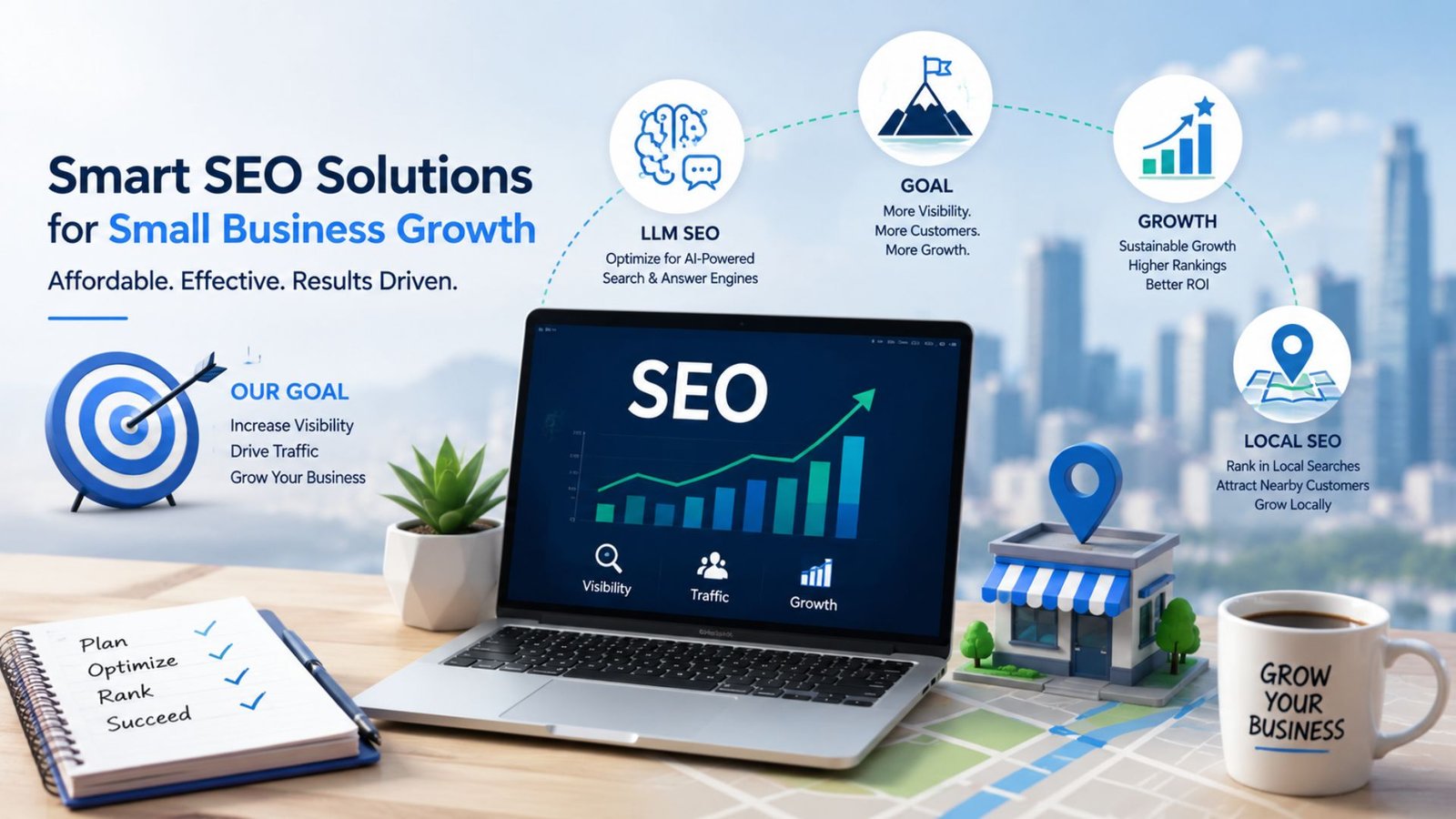
Affordable SEO Services for Small Businesses in 2026-27: All You Need to Know!
What does it really take for a small business to stand out in today's competitive online market? An excellent product or service? Outstanding customer support? Or perhaps competitive pricing? Well, these are all essential for long-term success; many small businesses already offer them. The real challenge is ensuring potential customers can actually find your business online when they need it. And that’s where most small businesses are falling apart. As search continues to evolve in 2026-27 with AI-powered platforms alongside Google, simply having a website isn’t enough. You need a strategy that helps your business get discovered. And that’s where affordable SEO services for small businesses in 2026-27 enter the chat. Today, various reliable companies offer affordable SEO services for small businesses to help them navigate the ever-evolving digital landscape smoothly. These services are designed to improve your online visibility, attract the right audience, and drive organic traffic without requiring a massive marketing budget. Honestly, conversion here isn’t about whether small businesses should invest in SEO. Instead, it’s about having a clear roadmap to help them identify and choose a reliable SEO service provider that aligns with their goals and budget. See, we can read your mind!Now, it's your turn to read this comprehensive guide and discover how to choose the right affordable SEO services for your small business in 2026-27.So, let’s just delve in! The Changing Landscape of SEO in 2026-27 for Small Businesses: Essential Information Before taking you through the perfect roadmap for affordable SEO services, we would like to share one essential piece of information that matters a lot in today’s digital era. SEO in 2026-27 looks significantly different from what it did just a few years ago. Yes, you heard that right! Today, SEO is shifting from “ranking a website” to “being recommended or referenced in the AI answers”. Though ranking on Google’s first page is still important, it’s no longer the only goal. Today, small businesses (or should we say all businesses) also need to optimize their content for AI-powered search experiences, where users expect direct, conversational, straightforward answers. In May 2026, Google stepped into the new era of search agents with the introduction of the Gemini 3.5 flash model. This marked the biggest update from Google to its search box in over 25 years. Instead of relying solely on a list of blue links, Google allowed users to interact with or search directly with AI chatbots.Introduction of LLM SEO in 2026 This new AI-driven search experience has led to the rise of LLM SEO (Large Language Model SEO), which is rapidly becoming an essential part of modern search optimization. Unlike traditional keyword rankings, LLM SEO aims to make your content trustworthy and reference-worthy for AI systems such as Google AI Mode, ChatGPT, Gemini, Claude, and Perplexity. Understand this with an example: Imagine you own a local bakery in Chicago. In the past, your goal was to rank on the first page of Google for keywords like “best bakery in Chicago”. However, in 2026, a user might directly ask an AI assistant, “What are the best bakeries in Chicago for custom wedding cakes?”And that’s where a difference has been made. Instead of displaying ten blue links, the AI generates a direct answer by referencing information from multiple reliable websites. Now, you may wonder how your website will get referenced in the AI overview. Well, for that, it must contain comprehensive, well-structured, and trustworthy content about your custom wedding cakes, customer reviews, pricing, and expertise; only then does it have a better chance of getting mentioned in AI chatbots. If your website is lacking Jo this, find a trusted SEO service provider that can help you with LLM search optimization. What Services Should an Affordable SEO Package in 2026-27 Include? If you’re looking for reliable, affordable SEO services for small businesses in 2026-27, ensure their packages contain the following key components. 1. Website SEO Audit A website SEO audit is the foundation of every successful SEO campaign. According to Nick Sawinyh, a CEO and founder of SEOmator, a website that conducts quarterly audits, witnesses 50% lower bounce rates, 32% higher conversion rates, and significant organic traffic of more than 61% compared to those who avoid regular website audits. This clearly demonstrates how essential it is for an SEO service provider to audit your website. If you don’t know much about website audits, read this: During an SEO audit, experts analyze factors such as website speed, mobile responsiveness, crawlability, indexing status, broken links, duplicate content, URL structure, metadata, Core Web Vitals, internal linking, and overall user experience. Moreover, they also evaluate your competitors to understand where your business stands in comparison. A website audit is similar to a full-body health check-up, helping identify hidden issues before they become bigger problems. Most affordable SEO services for small businesses in 2026-27 include a website audit as a key component before developing a proper strategy. 2. LLM SEO As mentioned below, LLM SEO is the biggest trend in the digital marketing field in 2026. LLM SEO has completely changed how people search on Google. Nowadays, users directly ask their queries to AI-powered search platforms like Gemini, Claude, ChatGPT, & perplexity, instead of exploring different blue links on Google. Thus, while looking for a trusted SEO service provider in 2026-27, make sure they include LLM (Large Language Model) search optimization in their SEO package. 3. Keyword & Search Intent ResearchEven as LLM SEO and AI-powered search continue to reshape how people discover information, keyword research remains a fundamental part of any successful SEO strategy. The difference is clear: “modern SEO is no longer about chasing the highest search volume or stuffing pages with keywords; instead, it’s about understanding what users are searching for, why they’re searching, and what type of answer they expect.”And that’s where keyword & search intent research becomes important. They help businesses identify the exact words, phrases, and questions their target audience uses at different stages. These insights allow businesses to create content that aligns with real user needs, making the website get referenced in AI-answers as well as ranking on top of Google Search Engines. Usually, search intent keywords are classified into four categories: Informational: "How does SEO work?"Navigational: "Ahrefs pricing"Commercial: "Best affordable SEO agencies"Transactional: “Hire an SEO company near me”While looking for affordable SEO services for small businesses in 2026-27, make sure their plan of action includes all this search intent keyword research.4. On-Page SEO In simple words, On-Page SEO is the process of optimizing the content and HTML elements of individual web pages, allowing the search engines and visitors to easily find the website. Generally, On-Page SEO includes :Optimizing page titlesContent optimization for all pagesMeta description with ideal character lengthHeading structure URL formatting Image alt text Internal links Keyword placement Schema markup ReadabilitySince we’re in the AI-powered SEO era of 2026-27, on-page search optimization extends beyond keywords. It focuses on creating helpful, well-structured, and authoritative content that satisfies user intent while making it easier for search engines and AI chatbots. This is why, find an ideal SEO partner who understands this point perfectly. 5. Technical SEOTechnical SEO is the process of optimizing your website’s technical infrastructure so that search engines like Google can easily crawl, understand, index, and rank your web pages. Think of Technical SEO as the foundation of a building. Your website may have outstanding content and a visually appealing user interface, but if the foundation is weak, the entire structure becomes unstable. That’s a reason technical SEO matters a lot to increase the authority and relevancy of a website. Typically, technical SEO includes: Improving website speedOptimizing Core Web VitalsFixing crawl errorsXML sitemap optimizationRobots.txt configurationHTTPS securityCanonical tagsStructured data implementationMobile optimizationIf your website lacks the proper implementation of these technical essentials, it’s unlikely to perform well in today’s competitive digital landscape. Even the most informative content and visually appealing design can struggle to rank if search engines cannot efficiently crawl, understand, or index your website. According to Ahrefs, only 33% of websites on the internet pass the core web vitals threshold, while the remaining 67% of sites have slow pages that take longer than 3 seconds to load. When choosing affordable SEO services for small businesses in 2026-27, look for a provider that has a strong understanding of Technical SEO and its long-term impact on search performance. 6. Local SEOIf your business or service is based on a specific geographic area, ensure the SEO provider you’re considering is experienced in Local SEO. As the name suggests, Local SEO (Local Search Engine Optimization) is the process of optimizing a business’s online presence to improve its visibility in location-based search results. For example, when someone searches: “Coffee shop near me” “Best Dentist in Toronto” “Plumber in Los Angeles” “Furniture store in Chicago” Search engines like Google display businesses that are most relevant to the user’s location. Now, the question may arise: how can you help your business rank in these local search results? Well, that’s where the Local SEO becomes important. By implementing a local SEO strategy, you can connect your business with nearby customers at the exact moment they’re searching for what you offer. A comprehensive local SEO strategy generally includes: Google Business Profile optimizationLocal keyword researchLocation-specific landing pagesCustomer review managementLocal citationsNAP (Name, Address, Phone Number) consistencyLocal schema markup7. Content Strategy & Content Optimization “A goal without a plan is just a wish” – Antoine de Saint-Exupéry. In SEO, creating content without a strategy often leads to missed opportunities, regardless of how frequently you publish. When choosing affordable SEO services for small businesses in 2026-27, prioritize asking for a content strategy before making any final deal. A well-planned content strategy identifies the topics your audience cares about, organizes them into content clusters, and aligns every article/blog post with specific business goals. Since in 2026-27, people prefer reading straightforward and visually appealing content, small businesses should ensure their SEO service provider creates content with readability and user experience in mind. 8. Link Building & Digital PR The following statistics from Sixth City Marketing clearly demonstrate how backlinks (or link building) help improve a website's authority, credibility, and overall search engine performance.→ Google’s top-ranking page typically has around 3.8 times more backlinks than pages ranked #2 to #10, highlighting the importance of quality backlinks. → Websites with 30 to 35 high-quality backlinks can generate 10,500+ monthly visits. This important data clearly shows how search engines view backlinks as signals of trust and authority. When reputable websites link to your content, they essentially “vote” for your website, signalling to search engines that your information is valuable, relevant, and worthy of being recommended to users. Some of the most effective link-building techniques include: Publishing insightful guest posts on reputable websitesConducting original research that others naturally reference Sharing expert interviewsLaunching digital PR campaigns Collaborating with industry leadersThen comes digital PR, one of the most effective digital marketing techniques to attract organic traffic and establish brand authority. Digital PR takes traditional link building a step further by helping businesses earn mentions and backlinks from respected news websites, industry publications, bloggers, podcasts, influencers, and other authoritative online platforms. Understand this with an example, Imagine your company publishes original research on small business marketing trends in 2026-27. If a well-known business publication or industry blog cites your findings and links back to your website, it not only drives organic traffic but also strengthens your brand’s authority.Together, both of these backlinking strategies provide long-term online authority and organic visibility to your website. 9. Performance Tracking & Monthly ReportingSEO is not something that can elevate your website in a single day or a week. It is an ongoing process that requires continuous monitoring and improvement. You need to track the performance of your website each week or month to understand whether SEO investment in your business is producing measurable results or not. Always ask your SEO service provider for a detailed monthly report to evaluate the performance of the website. The top metrics that should be included in a monthly report are: Organic traffic growthKeyword rankingsClick-through rate (CTR)User engagementConversion rateBounce rateBacklink growthTechnical improvementsGoal completionsHow to Identify Reliable, Affordable SEO Services for Small Businesses in 2026-27? With hundreds of SEO agencies and freelancers offering similar services, choosing the right one can feel overwhelming. But don’t worry much! The following are a few factors to help you make an informed decision while choosing trusted, affordable SEO services for small businesses in 2026-27. I. Check Their Portfolio and Case Studies Explore the websites of SEO providers to know what they’ve worked on and the industries they have experience in. Read their case studies (if mentioned) in detail to evaluate their expertise in tackling different SEO challenges. II. Read Genuine Client Reviews Keep in mind that some companies may display fabricated or misleading client reviews on their own websites to attract potential customers. Instead of relying solely on testimonials published by the agency, check reviews on trusted platforms such as Google Business Profile, Clutch, or other third-party review websites. III. Understand Their SEO Process While exchanging conversations with SEO service providers, ask them about their approach to the SEO process. If they avoid explaining their process or keep everything vague, consider it a warning sign. IV. Ensure They Follow Ethical (White-Hat) SEO Practices Always choose an SEO agency that follows Google's recommended guidelines and uses ethical (white-hat) SEO practices. SEO is a long-term strategy, and it usually takes several months to achieve meaningful improvements in organic visibility and traffic through search engine-approved methods. If an agency promises significant rankings or organic traffic within just a few weeks, it's likely relying on questionable tactics that could put your website at risk of search engine penalties.V. Evaluate Communication & Transparency Good and transparent communication is a key element of every successful business relationship, and it is just as important as technical expertise. If your SEO partner answers your questions clearly, provides regular updates, and discusses challenges honestly without sugarcoating the situation, you've likely found a reliable agency.Online Marketing Champ (OMC): A Reliable, Affordable SEO Service Provider for Small Businesses in 2026-27 If you’re looking for a trusted SEO service provider for small businesses in 2026-27, look no further than Online Marketing Champ (OMC). As one of the leading global digital marketing agencies, Online Marketing Champ is redefining SEO with a modern, future-focused approach. Founded by Rahul Thakur in 2022, the agency brings together a highly skilled team of Gen Z professionals. The team of Gen Z effortlessly combines creativity, data-driven strategies, and the latest AI-powered marketing techniques to help small businesses grow online. Online Marketing Champ (OMC) operates at two different locations, one in Palampur and the other in Chandigarh, India. The agency was founded with the mission of making advanced digital marketing and SEO strategies accessible to businesses of every size. That’s also the reason why Online Marketing Champ markets itself as the “Global Digital Marketing Agency”, because we manage clients from all over the world. In just the last few years, our agency has helped over 50 small businesses build strong brand authority and online visibility. As of 2026, over 20 highly skilled professionals work on our team. The executive positions include: Rahul Thakur is the CEO and the Marketing Manager. Shruti Bansal as PPC Strategist. Shilpa Thakur as the SEO and LLM SEO Executive Harkirat Singh as Senior Content Writer & Executive Diksha Thakur as Senior Technical Content Writer Anmol Singh as Front-End Developer When choosing affordable SEO services for small businesses in 2026-27, consider Online Marketing Champ (OMC). No matter where your business is located or what kind of service you want, we will act as a reliable partner in helping you not only survive but thrive in this ever-evolving digital environment. Small Business Success Stories Powered by Online Marketing Champ Over the years, Online Marketing Champ has partnered with various businesses across diverse industries, helping them strengthen their online presence. Here are a few examples of how the agency has helped small businesses turn their digital goals into measurable results. 1. DollFace Beauty & WellnessThrough LLM SEO, user-focused content, and Google Business Profile optimization, Online Marketing Champ helped DollFace Beauty & Wellness achieve a 300% increase in organic traffic and rank for 100+ high-intent keywords, significantly strengthening its visibility across search engines and AI-powered platforms.2. Hisar TravelOnline Marketing Champ implemented a comprehensive SEO, LLM SEO, and content marketing strategy that helped Hisar Travel improve rankings for 150+ Hajj-related keywords and increase organic website traffic by 250%, establishing a stronger presence across Australia, New Zealand, and Fiji.3. CoinLess LaundryBy combining SEO, LLM SEO, content marketing, and local search optimization, Online Marketing Champ helped CoinLess Laundry achieve a 220% increase in organic traffic and improve visibility across 30+ service locations, resulting in greater brand awareness and customer engagement.Price Ranges of the Affordable SEO Services for Small Businesses in 2026-27Honestly, the cost of SEO services can vary depending on your business size, industry, & competition, and the scope of work required. According to Shilpa Thakur, SEO executive of Online Marketing Champ, the average price of SEO services may range from $300 to $700 for small businesses in 2026-27. “Due to the rising popularity of AI chatbots, businesses desperately want to leverage the benefit of this remarkable shift with LLM SEO. This is why many businesses may expect a little increase in the average price of SEO services,” says Shilpa Thakur while talking about the prices of affordable SEO services for small businesses in 2026-27. In contrast, Online Marketing Champ (OMC) has maintained competitive and affordable pricing for its SEO services, making professional digital marketing accessible to businesses of all sizes. As of 2026-27, we provide three SEO packages. Check the detailed info in the following table: PackagePricePackage DetailsStarter SEO Package$225/MonthIdeal for startups and local businesses looking to establish an online presence. Includes a complete website SEO audit, keyword research, on-page optimization, basic technical SEO, Google Business Profile optimization, 4 SEO-optimized blogs per month, monthly performance reporting, and ongoing SEO support.Growth SEO Package$300/MonthDesigned for growing businesses aiming to improve search visibility and generate consistent organic traffic. Includes everything in the Starter SEO Package, along with advanced keyword research, technical SEO implementation, local SEO, competitor analysis, quality backlink building, 8 SEO-optimized blogs per month, and monthly strategy consultations.Advanced SEO + LLM SEO Package$400/MonthBest suited for businesses seeking aggressive online growth through both traditional SEO and AI search optimization. Includes advanced technical SEO, a comprehensive content strategy, AI & LLM SEO optimization, premium link-building campaigns, 12 SEO-optimized blogs per month, conversion-focused optimization, detailed monthly reporting, priority support, and a dedicated SEO strategist.Final WordsChoosing the right affordable SEO services for small businesses in 2026-27 is one of the smartest investments you can make for your business. Focus on finding an SEO partner that offers ethical strategies, transparent communication, AI-ready optimization, and measurable results instead of unrealistic promises. If you're ready to grow your online presence and stay ahead in the evolving digital landscape, Online Marketing Champ is here to help. Contact our team today for a free consultation and discover the ideal SEO strategy for your business. Your journey to digital transformation starts here! Frequently Asked Questions (FAQs)Q-1. What are affordable SEO services for small businesses in 2026-27?Ans: Affordable SEO services are budget-friendly search engine optimization solutions designed to help small businesses improve their online visibility, attract organic traffic, and generate more leads. These services typically include website audits, keyword research, on-page SEO, technical SEO, content optimization, local SEO, and performance tracking.Q-2. How much do affordable SEO services cost in 2026-27?Ans: The cost of SEO depends on the scope of work, industry competition, and business goals. On average, affordable SEO services for small businesses in 2026-27 range from $300 to $700 per month, although some agencies offer customized packages based on specific requirements.Q-3. How long does it take to see results from SEO?Ans: SEO is a long-term marketing strategy. Most businesses begin seeing noticeable improvements within 3 to 6 months, while highly competitive industries may take longer. The exact timeline depends on your website, competition, and the SEO strategy being implemented.Q-4. What is LLM SEO, and why is it important?Ans: LLM SEO (Large Language Model SEO) focuses on optimizing content for AI-powered search platforms such as ChatGPT, Google AI Mode, Gemini, Claude, and Perplexity. It helps businesses increase their chances of being referenced in AI-generated answers while also improving traditional search engine visibility.Q-5. How can I choose a reliable SEO service provider?Ans: Look for an agency with a proven portfolio, genuine client reviews, transparent communication, ethical (white-hat) SEO practices, and a clear SEO strategy. A trustworthy provider should also offer regular performance reports and realistic expectations instead of guaranteeing instant results.Q-6. Why should I choose Online Marketing Champ for SEO?Ans: Online Marketing Champ combines traditional SEO with AI-powered LLM SEO to help businesses succeed in the evolving digital landscape. With affordable pricing, customized strategies, transparent reporting, and a team of experienced SEO professionals, the agency helps small businesses achieve sustainable long-term growth.
Read Full Article
September 29, 2026
LLM SEO in 2026-27: Strategies, Trends, and Best Practices
Search is no longer simply about entering a keyword into Google, scanning ten blue links, and choosing a website to visit. In 2026, users are increasingly asking complex questions directly to AI-powered search experiences, expecting a contextual answer rather than a list of pages.That change is reshaping digital marketing.Google's AI Overviews now reach more than 2.5 billion monthly active users, while Google says AI Mode has surpassed 1 billion monthly users globally. Google has also reported that AI Mode queries have more than doubled every quarter since its launch.For marketers, this creates a fundamental question: How does a brand remain visible when the customer may receive an answer before ever clicking a traditional search result?The answer increasingly lies in LLM SEO.In practical terms, LLM SEO means creating and structuring digital content so that large language models and AI-powered search systems can understand, trust, retrieve, reference, and potentially cite a brand's information when answering user questions.As we move through 2026 and toward 2027, this is becoming an increasingly important part of a modern search strategy. Traditional SEO is not disappearing, but the definition of search visibility is expanding beyond rankings and clicks.What Is LLM SEO?LLM SEO, or Large Language Model Search Engine Optimisation, is the practice of improving a brand's online presence so AI systems can better understand its expertise, products, services, information, and authority.It overlaps with concepts such as:Generative Engine Optimisation, or GEOAnswer Engine Optimisation, or AEOAI Search OptimisationEntity SEOSemantic SEOTraditional technical and content SEOThe difference is largely in the destination.Traditional SEO primarily aims to help a webpage appear prominently in search engine results. LLM SEO also considers what happens when an AI system generates an answer and decides which sources, entities, brands, websites, and facts should be included.Google itself says its AI Search experiences are designed to connect users with relevant websites and original content, while newer AI Search features provide links that allow users to continue exploring information on the web.That means marketers need to think beyond ranking.They need to think about being understood, being trusted, being referenced, and being remembered.Why LLM SEO Matters More in 2026 and 2027The biggest change is not simply that AI exists.The bigger change is how people search.Google reported in 2026 that people using AI Mode are asking more complex questions and that AI Mode queries have more than doubled every quarter since launch.Instead of searching:“best CRM software”a user may ask:“Which CRM is suitable for a 20-person B2B sales team that needs automation, WhatsApp integration, reporting, and a simple onboarding process?”That is a very different search behaviour.AI systems are designed to understand the context behind such questions. Therefore, content that merely repeats a keyword may have less strategic value than content that thoroughly answers the underlying intent.This is why LLM SEO in 2026-27 is moving toward entity understanding, contextual relevance, firsthand expertise, structured information, and comprehensive answers.AI Search Is Becoming a Major Discovery LayerGoogle's 2026 data provides a useful indication of the scale of this transition.AI Overviews have surpassed 2.5 billion monthly active users, while AI Mode has surpassed 1 billion monthly users. Google also reported that Search queries reached an all-time high in the period discussed in its 2026 updates.For businesses, this creates another digital discovery layer.A potential customer might encounter a company through:A traditional Google resultAn AI OverviewGoogle AI ModeChatGPTGeminiAnother conversational search platformA social platform whose content is later incorporated into AI-generated answersThe modern search journey is therefore becoming increasingly fragmented and conversational.Traditional SEO Is Not Dead, It Is Becoming the FoundationOne of the biggest mistakes businesses can make is assuming LLM SEO means abandoning traditional SEO.It does not.Technical accessibility, crawlability, quality content, internal linking, structured data, topical authority, page experience, and reputable references remain important.AI search still needs information to retrieve.The difference is that marketers now need to optimise for multiple search surfaces simultaneously.Think of traditional SEO as the foundation and LLM SEO as an additional visibility layer built on top of it.This is the central philosophy behind LLM SEO in 2026-27.From Keywords to EntitiesTraditional keyword optimisation asks:What phrase should this page rank for?LLM SEO asks a broader question:What does this page help an AI system understand?For example, a page about "commercial property management" should not simply repeat that phrase dozens of times.It should clearly explain:What commercial property management involvesWho needs itWhich services are includedWhat problems it solvesHow the process worksWhat regulations or considerations may applyWhat makes one provider different from anotherFrequently asked questionsRelevant examplesSupporting evidenceThis creates a stronger semantic environment around the subject.The Importance of Firsthand ExpertiseAI can generate generic information extremely quickly.Therefore, generic information alone is becoming less differentiated.Brands need to demonstrate what they know from experience.This could include:Original researchCase studiesCustomer examplesExpert commentaryProprietary dataOriginal statisticsIndustry observationsFirsthand processesDemonstrationsDetailed comparisonsA marketing agency, for example, should not publish another generic article explaining "what is SEO?"It can instead explain what it has observed across hundreds of campaigns, what changed after AI search adoption, which content formats performed differently, and what businesses should measure.That is considerably more valuable.As Rahul Thakur explains in OMC's published SEO strategy discussion, “The problem is not visibility alone; it is a behavioural shift.”That distinction is important.A business can have excellent rankings and still need to adapt if users increasingly obtain answers without visiting the ranking page.8 LLM SEO Strategies To Consider in 2026-27 Strategy 1: Build Topical AuthorityThe first major strategy for LLM SEO in 2026-27 is topical authority.Instead of publishing isolated articles, create interconnected content ecosystems.Suppose a company sells cybersecurity software.Rather than publishing one article about cybersecurity, it could develop clusters covering:Cybersecurity fundamentalsEndpoint securityCloud securityZero trustRansomwareSecurity complianceEmployee securityPassword managementIncident responseCybersecurity for specific industriesThese pages should be connected logically through internal links.This gives search engines and AI systems a clearer understanding of the site's expertise.Strategy 2: Write for Questions, Not Just KeywordsAI search is increasingly conversational.Therefore, content should address natural questions.Instead of creating separate pages solely for:SEO servicesSEO agencySEO companySEO consultantA stronger content architecture can explain the broader subject while naturally addressing related questions.For example:What Does an SEO Agency Do?How Much Do SEO Services Cost?What Does an SEO Campaign Include?How Long Does SEO Take?How Do You Measure SEO Results?What Is the Difference Between SEO and LLM SEO?This creates a comprehensive resource rather than a keyword collection.Strategy 3: Optimise for Direct AnswersAI systems need concise information that can be understood and contextualised.A strong article should therefore provide direct answers before expanding into deeper explanations.For example:What is LLM SEO?LLM SEO is the process of optimising a brand's digital presence so that large language models and AI-powered search systems can understand, retrieve, and potentially reference its information.Then explain the subject in greater depth.This structure benefits both humans and machines.Strategy 4: Strengthen Brand Mentions Across the WebAI visibility does not depend exclusively on what a company says about itself.The wider digital ecosystem matters.Brands should build consistent and credible mentions across:Industry publicationsRelevant directoriesExpert interviewsPodcastsYouTubeReddit discussionsLinkedInNews coveragePartner websitesCase studiesIndustry communitiesThe objective is not simply to acquire backlinks.The objective is to establish a recognisable entity with consistent information across multiple sources.Strategy 5: Create Content That Earns CitationsAn AI system needs reasons to reference a source.That means marketers should invest in information worth citing.For example:Instead of:“SEO is important for businesses.”Create:“Our analysis of 100 ecommerce pages found that product pages with structured comparison information generated higher engagement than pages relying exclusively on promotional copy.”The second statement contains an original observation.It can potentially become a reference point.This is one of the most important shifts in LLM SEO in 2026-27, moving from content production toward information creation.Strategy 6: Use Data and Statistics CarefullyStatistics can increase credibility, but only when they are trustworthy and contextualised.A strong AI search strategy should identify:Where the number came fromWhen it was measuredWhat population was studiedWhat methodology was usedWhether the number is global or regionalWhether it represents correlation or causationFor example, Google's 2026 reporting states that AI Overviews have surpassed 2.5 billion monthly active users, while AI Mode has surpassed 1 billion. These figures describe Google's own products and should not automatically be interpreted as the total size of the global AI search market.This distinction matters because AI systems increasingly evaluate information in context.Strategy 7: Make Content Easy for AI to UnderstandTechnical SEO still matters.Businesses should pay attention to:Clear page structuresDescriptive headingsLogical internal linkingStructured data where appropriateConsistent entity informationAccurate author informationUpdated contentAccessible HTMLStrong site architectureFast, crawlable pagesClear business informationThe objective is simple:“Do not make the AI system work unnecessarily hard to understand your business.”Strategy 8: Measure AI Visibility DifferentlyTraditional SEO reporting commonly focuses on:RankingsOrganic trafficImpressionsClick-through rateConversionsBacklinksLLM SEO requires additional measurements.Businesses should begin monitoring:AI citationsBrand mentions in AI answersShare of AI visibilitySentiment and context of AI mentionsCompetitor mentionsCitation sourcesReferral traffic from AI platformsAssisted conversionsBranded search growthThis does not mean abandoning traditional KPIs.It means expanding them.What Trends Will Define LLM SEO in 2027?Several developments are likely to remain important as AI search matures.I. Conversational Search Will Become NormalUsers will increasingly search through complete questions and follow-up conversations rather than isolated keywords.Google has already described AI Search as becoming more conversational, with users able to move from AI Overviews into follow-up conversations in AI Mode.II. Original Content Will Become More ValuableWhen generic AI-generated information becomes abundant, original information becomes a competitive advantage.Brands with proprietary research, expert opinions, case studies, customer data, and practical experience will have more opportunities to differentiate.III. Brand Authority Will Matter MoreAI systems do not simply need words.They need context.A recognisable company with consistent information across multiple credible sources provides more context than an anonymous website publishing hundreds of generic articles.IV. Search Will Become More MultimodalGoogle is already developing Search experiences that can work across text, images, files, videos, and other forms of information.This means businesses should not think about SEO exclusively as written content.Video, visual assets, structured information, product information, and other digital formats can all become part of the discovery ecosystem.The Biggest Mistake Brands Should AvoidThe biggest mistake is treating LLM SEO as another keyword stuffing exercise.Adding phrases such as "best AI SEO agency" or "LLM SEO services" repeatedly will not automatically make a brand authoritative.AI search optimisation is fundamentally about information quality and contextual relevance.Shilpa Thakur's perspective in OMC's published strategy discussion captures this shift: “The biggest mistake brands are making with SEO is optimising to be cited instead of optimising to be chosen.”That means citation visibility should not become the only objective.The ultimate goal remains business growth.A successful strategy should move from:Visibility → Trust → Engagement → Conversion → Retentionrather than stopping at:Visibility → CitationWhy LLM SEO Is Becoming a Smart Marketing PriorityThe marketing landscape of 2026 is fundamentally different from the landscape of five or ten years ago.Consumers have more information.AI can summarise that information.Search engines are integrating generative AI directly into discovery.And users increasingly expect personalised answers rather than generic search results.For that reason, LLM SEO in 2026-27 represents a strategic shift rather than simply another SEO trend.Businesses that continue producing content exclusively for traditional rankings may miss an expanding discovery environment.Businesses that combine technical SEO, authoritative content, original insights, brand building, structured information, and AI search optimisation can build visibility across both traditional and emerging search experiences.In this environment, LLM SEO is becoming one of the smartest marketing priorities for brands that want to remain discoverable as search evolves.Why Choose OMC for LLM SEO Services?At Online Marketing Champ, OMC, we approach LLM SEO as a broader digital visibility strategy rather than a simple content optimisation exercise.Our approach combines traditional SEO with AI search optimisation, topical authority, content strategy, entity optimisation, AEO, GEO, brand visibility, and conversion-focused content.We focus on questions such as:Is your brand being discovered by AI search?Which topics associate your brand with expertise?Are AI systems accurately understanding your services?Which competitors are appearing in AI-generated answers?What content gaps are preventing your brand from being referenced?Which existing pages can be strengthened for AI search?How can content visibility translate into qualified leads?Our work is built around the idea that SEO should create business value, not simply more pages.As search continues moving toward conversational and AI-mediated discovery, we help businesses adapt their content and digital presence accordingly.The Future of Search Is Already Being BuiltThe transition from traditional search to AI-assisted discovery is no longer theoretical.Google reports billions of monthly users interacting with AI-powered search experiences, and AI Mode has already crossed the 1 billion monthly user threshold.The implication for businesses is straightforward.Search visibility is becoming broader than a position on a results page.It is about whether an AI system understands your brand, whether your information can be retrieved, whether your expertise can be supported by credible evidence, and whether your brand becomes part of the user's consideration journey.That is the opportunity behind LLM SEO in 2026-27.The brands that start adapting now can build the foundations needed for an increasingly AI-driven search ecosystem.Ready to Make Your Brand AI Search Ready?At OMC, we help businesses build visibility across traditional search and emerging AI-powered discovery platforms through strategic LLM SEO Services.From content strategy and topical authority to entity optimisation, AEO, GEO, technical SEO, original research, and AI visibility tracking, we build strategies designed around how people search today and how search is evolving for tomorrow.Want your brand to become more visible across AI search? Contact OMC today and build your LLM SEO strategy for 2026 and beyond.Frequently Asked Questions (FAQs)Q-1. What is LLM SEO?Ans: LLM SEO is the process of optimising a brand's digital presence so that large language models and AI-powered search systems can understand, retrieve, reference, and potentially cite its information. It combines elements of traditional SEO, semantic SEO, AEO, GEO, entity optimisation, content strategy, and brand authority.Q-2. Is traditional SEO still important in 2026?Ans: Yes. Traditional SEO remains an important foundation for digital visibility. LLM SEO does not replace technical SEO, quality content, internal linking, website accessibility, or other established optimisation practices. Instead, it expands SEO into AI-powered search environments.Q-3. How is LLM SEO different from traditional SEO?Ans: Traditional SEO primarily focuses on improving visibility within search engine results. LLM SEO additionally focuses on how AI systems understand a brand and use information from its website and other sources when generating answers. This makes context, entities, authority, original information, and conversational relevance increasingly important.Q-4. How can a business improve its LLM SEO?Ans: Businesses can improve LLM SEO by developing topical authority, creating original and useful content, answering conversational questions, strengthening technical SEO, maintaining consistent brand information, earning credible mentions, publishing firsthand insights, using structured information appropriately, and monitoring AI-generated brand mentions and citations.Q-5. Why should businesses invest in LLM SEO in 2026 and 2027?Ans: AI-powered search is becoming a significant part of how people discover and evaluate information. Google reports more than 2.5 billion monthly active users for AI Overviews and more than 1 billion monthly users for AI Mode. Investing in LLM SEO allows businesses to prepare for this changing discovery environment while continuing to benefit from traditional search visibility.
Read Full Article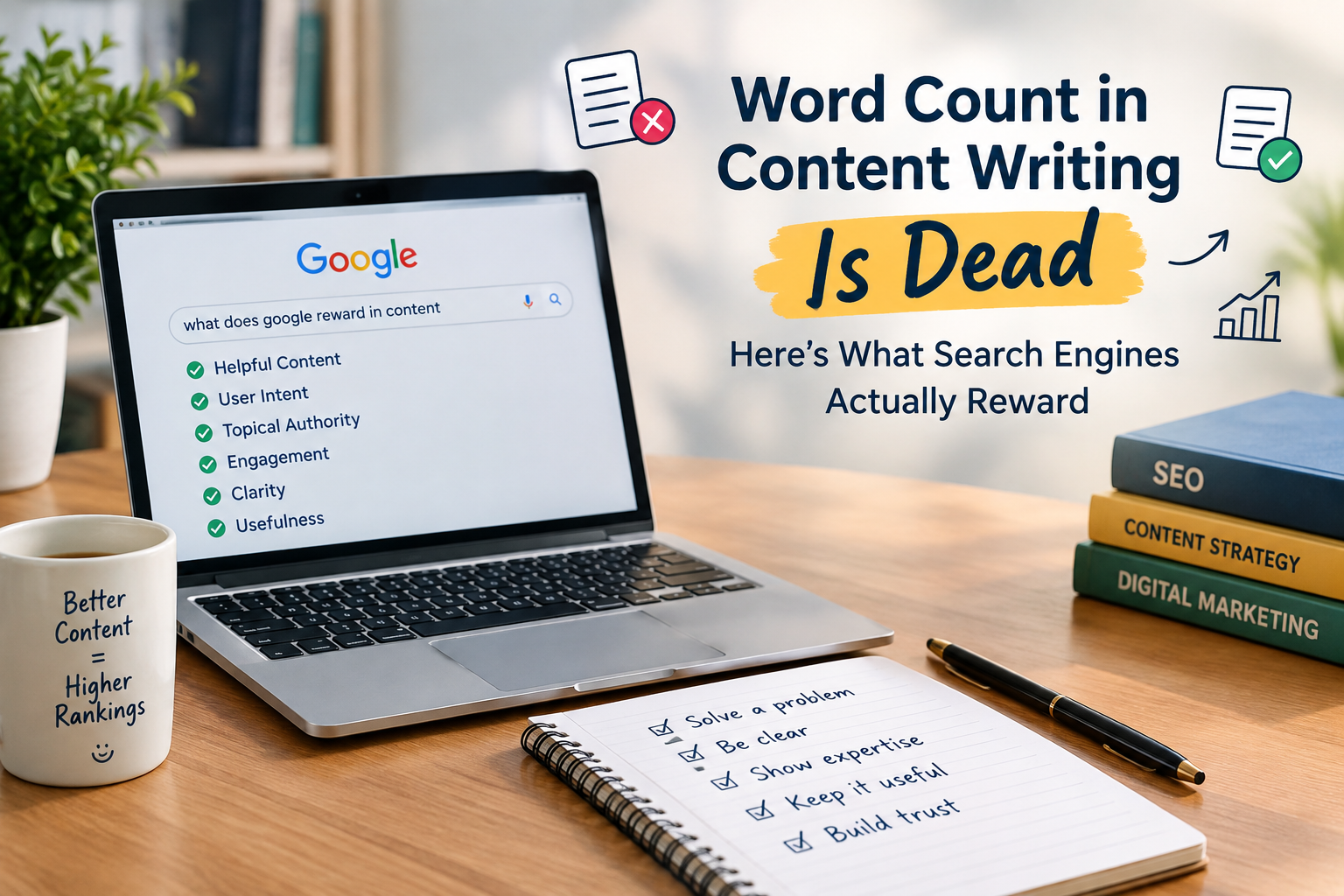
September 14, 2026
Word Count in Content Writing Is Dead, Here’s What Search Engines Actually Reward
For years, content strategies revolved around a single number. 800 words. 1,200 words. 2,000 words to rank. But today, that obsession is quietly losing relevance. Word count in content writing is dead, and search engines are no longer impressed by inflated articles (generated with the help of AI tools) designed to hit an arbitrary length. What they reward now is far more nuanced and far more human. “Search engines have matured. They are no longer counting words; they are measuring value,” says Harkirat Singh, Senior Content Writer at Online Marketing Champ. According to him, content that genuinely solves a problem often outperforms longer pieces that exist only to fill space. “A concise article that answers intent clearly will always beat a long one that dances around the point,” he adds. As algorithms evolve to understand context, intent, and user satisfaction, writers must shift focus. Engagement, clarity, topical authority, and usefulness now define success. This detailed guide breaks down what search engines actually reward today and why letting go of rigid word count rules can elevate both rankings and reader trust. Why Word Count Isn’t a Direct Ranking Factor? Contrary to popular belief, Google does not use word count as a ranking factor; this has been confirmed by Google’s own search spokespeople. John Mueller, a senior Search Advocate at Google, has repeatedly stated that search engines do not count the number of words to determine ranking quality.In fact, Google’s algorithm focuses far more on user satisfaction and intent fulfillment rather than length: Word count in content writing doesn’t determine quality. A short, precise answer can be more valuable than a long, rambling piece. Pages with few words can rank well if they fully satisfy the user’s query. What Search Engines Actually Reward? 1. Search Intent Match Search intent has become the most critical factor in modern SEO. Search engines now analyze why a user is searching, not just what they typed. Commonly, there are four major intent types: Informational, users want knowledgeNavigational, users want a specific siteTransactional, users are ready to take actionCommercial investigation, users are comparing options Content that aligns precisely with intent consistently outranks longer content that misses the point. For example, a 700-word article that clearly explains a process will outperform a 2,500-word article that delays the answer with unnecessary background. This is a reason why word count in content writing doesn’t hold much importance. All you need to do is write a unique, well-detailed, and precise article that explains the specific topic clearly in fewer words. Harkirat Singh has rightly explained this point, stating, “Intent alignment beats word count every time. If your content answers the query faster and better, it wins.”2. Topical Depth While word count in content writing is irrelevant, topical depth is not. Search engines reward content that demonstrates strong subject understanding and contextual relevance. Topical depth means: Covering all essential subtopics Addressing common user doubts Providing examples, data, or explanations Connecting related concepts naturally Research shows that many top-ranking pages are long, but not because of a required word count. They are long because the topic itself demands explanation. For simpler queries, shorter content often performs better. For example, an article on AEM integration naturally requires a higher word count because it involves multiple subtopics and detailed explanations, which is justified. However, for a topic like “Key Features of AEM,” there is no need to stretch the content to 2,000 words. In such cases, shorter content that clearly answers user queries is far more effective. So, the key takeaway is simple. Write as much as the topic requires, not as much as a tool suggests. 3. EEATExperience, Expertise, Authoritativeness, and Trustworthiness now play a significant role in how content is evaluated, especially for high-risk niches such as finance, health, and legal topics.Search engines look for:Real-world experience reflected in the writingClear author credentialsAccurate, well-explained informationTransparent sourcing and structureA short article written by a verified expert can outperform a longer anonymous article with generic information. This is another reason word count in content writing has lost relevance; credibility matters more.4. User Engagement SignalsSearch engines increasingly rely on user behavior signals to assess content quality. While Google does not directly confirm metrics like dwell time or bounce rate as ranking factors, strong correlations exist. Engagement indicators include: Time spent on the pageScroll depth Click-through ratesReturn visitsContent that keeps users engaged signals satisfaction. Overly long content often increases bounce rates because users feel overwhelmed or frustrated. Concise, well-structured content keeps users focused and improves engagement naturally. 5. Content Structure and Readability There is one common saying in the industry that says, “Modern SEO rewards how content is presented, not just what it says”. A well-structured content improves user experience and helps search engines understand the page better. Unfortunately, many young writers tend to overlook formatting and readability while focusing only on adding more words. This often results in dense blocks of text that discourage readers and increase bounce rates. To all the talented young writers out there, keep these points in mind as you work on content structure and readability.Clear H1, H2, & H3 hierarchy Short paragraphs for easy scanning Bullet points and numbered lists Relevant internal linking Use of Active Voice Inclusion of Transition WordsThese structure and readability parameters allow search engines to extract featured snippets and improve accessibility. None of this depends on word count. 6. Avoid Content Padding With advances in natural language processing, search engines can identify when content is artificially extended. Rephrased ideas, repeated explanations, and unnecessary introductions are now easily detected.Padding hurts content by:Lowering readabilityIncreasing bounce rateReducing trustWeakening topical focusAs Harkirat Singh notes, “Padding content to meet word count expectations is one of the fastest ways to lose rankings today.”When Word Count Still Matters and When It Does NotWord count is not irrelevant in every scenario. It still plays a supporting role depending on the topic.Word count matters when:The topic is complex and technicalMultiple user questions need addressingAuthority building is the goalWord count does not matter when:The query has a clear, narrow answerUsers want quick solutionsThe topic is straightforwardUnderstanding this distinction is essential for modern content strategies.Online Marketing Champ, A Trusted SEO Agency Shaping the Skills of Young WritersOnline Marketing Champ is a trusted SEO agency committed to building the next generation of skilled content professionals. Beyond delivering result-driven digital marketing solutions, the agency actively invests in nurturing young talent through structured learning and real-world exposure. As a marketing agency, Online Marketing Champ offers dedicated internship programs in Palampur, Himachal Pradesh, designed to sharpen the skills of talented content writers. Interns gain hands-on experience in SEO writing, content strategy, keyword research, and performance-driven storytelling. Under the guidance of experienced marketers and editors, young writers learn how to create content that aligns with search intent, user experience, and modern SEO standards. If you’re from Palampur or nearby areas in Himachal Pradesh, you should consider joining our internship programs. For more info related to our content writing services, contact us today.
Read Full Article